Many operators are challenged with completing a job correctly and on time. There are many factors that can influence a job outcome, such as tool life, operator error, and system productivity. One of the most effective ways to overcome these issues is through the use of an assisted tube rolling system.
Key Features of Assisted Systems
Modern assisted systems come equipped with different features designed to enhance performance and reliability:
• Torque Control: Various types of torque control are used to accurately measure and control torque, allowing for consistent wall reduction with every roll. This precision is critical for eliminating rework and downtime.
• Expander Holder and Articulated Arm: An articulated arm and expander holder work together to securely support the motor and expander. This ensures proper tool alignment and prevents premature tool breakage often caused by axial load.
• Auto-Lubrication: This feature provides automatic expander lubrication to the working area of the tool, significantly increasing tool life and reducing downtime that would otherwise be spent lubricating tooling manually.
Factors for System Selection
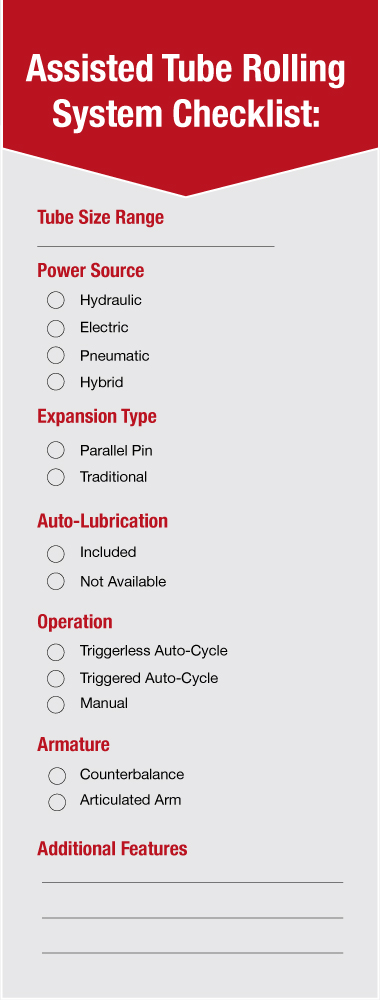
When purchasing an assisted tube rolling system, you should evaluate several factors to determine the best solution for your application: tube size, consistency, productivity, and ergonomics.
Tube Size
First, consider the tube size and materials you will be working with. While most systems cover a wide range, some are specifically designed for rolling smaller tubes, such as those found in oil coolers and small heat exchangers. These compact systems are also well-suited for confined or smaller workspaces.
Additionally, consider the tube material that you will be working with, as that will determine what torque range is required for the application. While a system may cover a range of tube sizes, the torque output could be more limiting.
Consistency
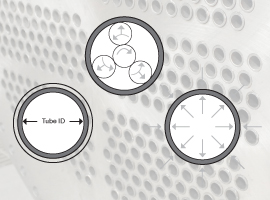
Next, examine the system’s consistency. The primary goal of tube rolling is to achieve a sound mechanical tube-to-tube sheet joint. To ensure high-quality expansions, the tube wall must be reduced by a predetermined percentage that is consistent across every expansion. Maintaining this consistency drastically reduces the chance of tube leaks and costly rework later.
Assisted tube rolling systems offer significantly better consistency than manual rolling due to built-in torque control systems. While pneumatic motors offer speed, their consistency can suffer from fluctuations in air volume or pressure. To overcome this, many advanced systems utilize an electronic torque control unit that can regulate a motor regardless of its power source. An electronic torque control system is generally preferred for heat exchanger applications due to their increased precision and sensitivity.
Productivity
Productivity is also an important aspect of system selection. Using an assisted tube rolling system can significantly prolong tool life and boost overall job output. As mentioned, an expander holder ensures proper tool alignment and automatic tool lubrication extends the life of the expander—a particular advantage when working with vessels that have thick tube sheets or water boxes.
Beyond tool life, the system speed and rolling method is crucial for determining productivity. When considering cycle time, tooling change-out, and lost time due to rework, different expansion methods offer varying levels of efficiency:
- Traditional Expansion(Good Option):
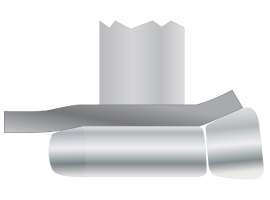
In traditional expansion, speed is defined by the rotation of the mandrel and its feed angle. Once expansion is complete, the mandrel rotation must be reversed to remove the expander. This forward and reverse can amount to a longer cycle time.
- Parallel Pin Rolling System(Better Option):
The expander is continuously rotated in one direction while the mandrel is independently pushed and pulled from the tube. This method reduces cycle times by 50% or more compared to traditional expansion.
- Combined System(Best Option):
While parallel pin expansion is highly efficient, a system that allows operators to switch between parallel and traditional expansion methods offers the greatest flexibility. Since parallel pin is not well suited for every heat exchanger application, a combined system decreases capital spending.
Ergonomics
Each system is equipped with features designed to reduce operator fatigue and stress when rolling. For instance, a counterbalance-type system can reduce the weight of the motor for the operator. However, most counterbalance systems do not absorb the motor’s reaction torque, meaning the operator still takes on that force.
A better ergonomic solution is an articulated arm, which not only supports the motor’s weight but also effectively absorbs its torque, allowing the operator to position and roll the motor with minimal effort. Ease of use is also a key ergonomic consideration, often achieved through automation. An auto-reverse system makes the expansion process easier by ensuring the motor rolls until it hits the set torque and then automatically reverses out of the tube
Taking this a step further, some advanced systems are equipped with auto-cycling, which allows the operator to simply turn the system on, and it will start, stop, and reverse without any further manual intervention. These features collectively contribute to a safer, less physically demanding, and more efficient rolling process.
Conclusion
Assisted tube rolling systems are an excellent investment for increasing productivity and decreasing operating costs. By carefully considering tube size, consistency, productivity, and ergonomics, you can choose the system that provides the optimal solution for your facility.