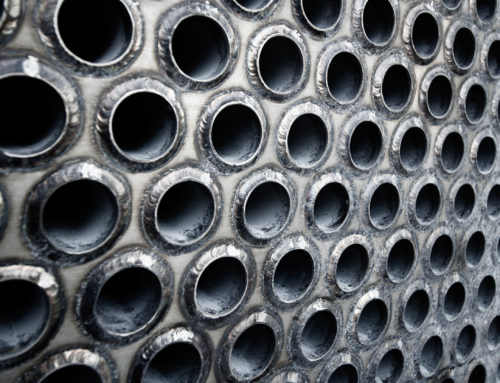
Data Center Chiller Tube Cleaning in the AI Era
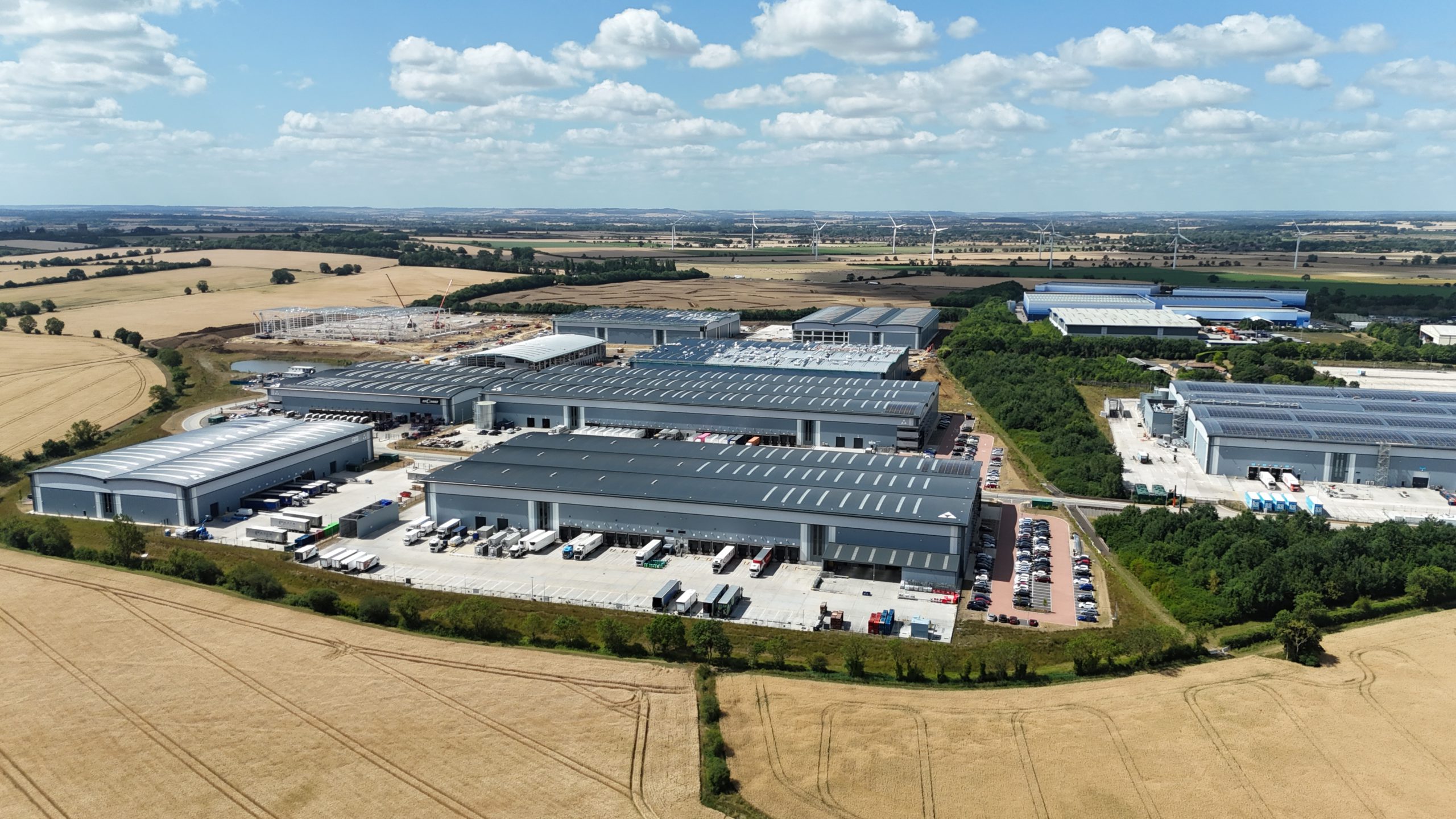
Why Chillers Matter In Data Centers
Chillers do the unglamorous work that keeps a data center running. They pull heat out of rooms, racks, and individual machines, cooling the air that holds servers below their thermal limits. As AI workloads continue to push data center cooling systems harder than ever, reliable chiller maintenance has become increasingly important. When chillers fall behind, components throttle, equipment auto-shut to protect themselves, and power load climbs as the system fights to compensate. A chiller running below spec is a reliability problem with a direct line to uptime.
Chiller Maintenance Stack
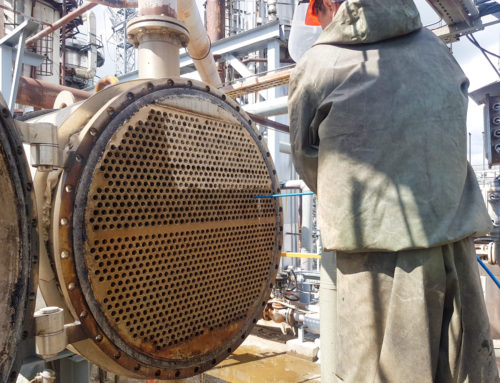
Keeping a chiller in spec means staying on top of several items in parallel: compressor vibration analysis, bearing inspections, condenser and evaporator cleaning, sensor calibration, and controls tuning. Tube cleaning sits in the middle of that list, but it carries more weight than its position suggests. Fouled tubes show up first in operating data and degrade efficiency faster than almost anything else on the list.
What Approach Temperature Tells You
One of the most important indicators of chiller performance is approach temperature, which measures the difference between the temperature of the media entering the chiller and the target temperature it needs to deliver. As tubes foul, heat transfer drops. The chiller works harder to reach the same setpoint, and the approach temperature climbs. Operators watching that delta will see it creep up well before any alarm fires. A rising approach temperature triggers an efficiency review, and that review almost always ends with a chiller tube cleaning on the schedule.
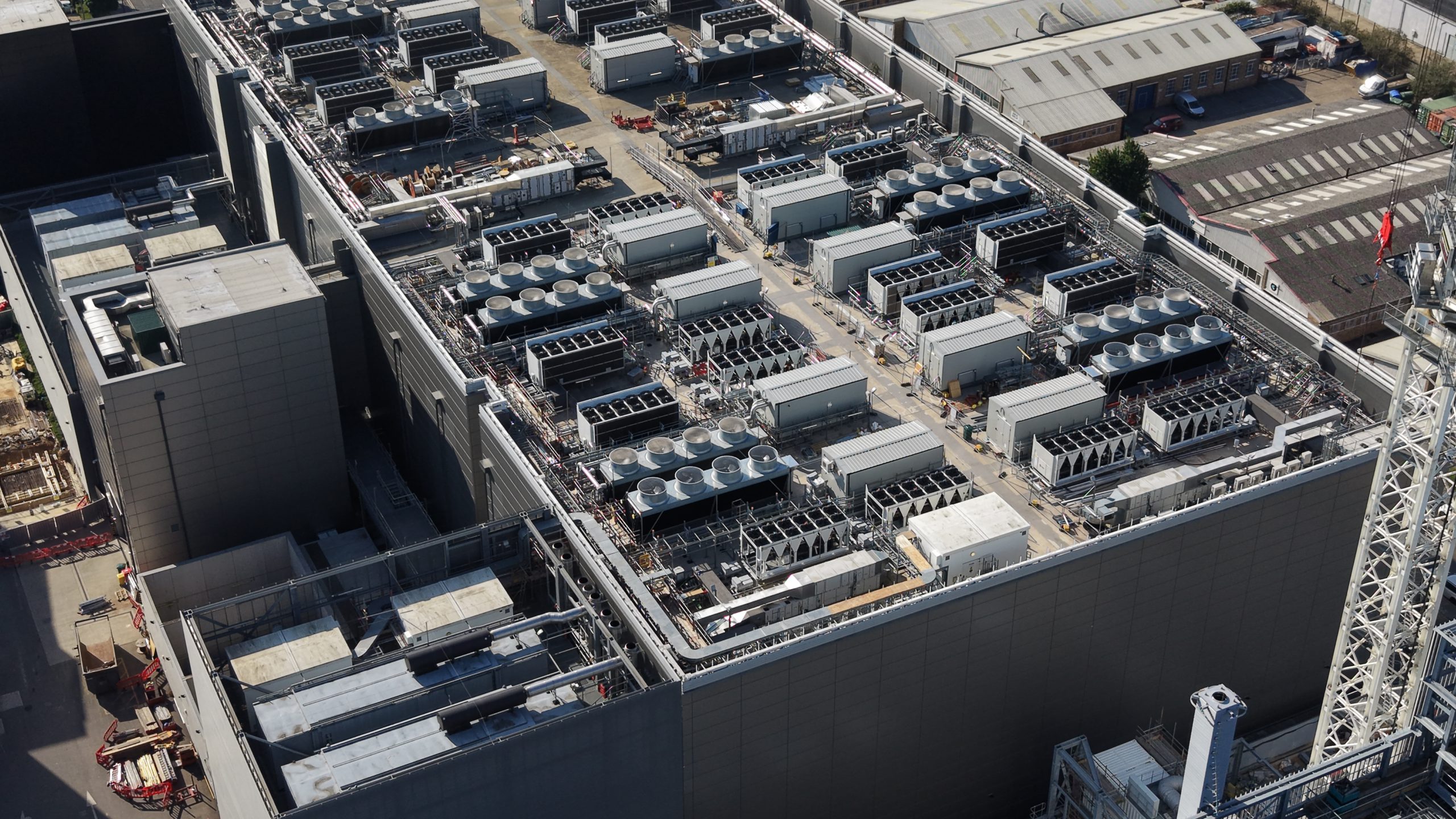
Chiller Tube Cleaning Intervals
AI and hyperscale workloads have driven utilization to levels that make old intervals look optimistic.
Condenser-Side Tubes (Open-Loop Systems)
On the condenser side (open-loop systems tied to cooling tower water from ponds, lakes, or municipal supplies), mechanical brushing has shifted from once a year to every six to eight months. That’s roughly a 50% increase in frequency. Open-loop water carries minerals, biological growth, and sediment, and at higher heat loads chiller tubes foul faster.
Evaporator-Side Tubes (Closed-Loop Systems)
On a cleaner closed loop, evaporator tubes have historically gone up to a year between cleanings. Operators are now planning intervals closer to eight to ten months. A closed-loop system does not mean immunity. Construction debris from build-outs and poor water chemistry still accelerate tube fouling, regardless of loop design.
What Contractors Are Seeing on the Ground
One field service contractor put the shift plainly. A chiller tube cleaning workload that used to fill a year now fills a month or two.
“We’re cleaning tubes non-stop.”
Contractors working at hyperscale and AI-heavy sites will till you the same thing.
Utilization Is the Real Variable
The pattern isn’t universal. Smaller sites with disciplined water treatment and lower utilization can still stretch tube cleaning intervals close to the old norms. Site size and operator skill matter less than how hard the chiller is being run. The harder the load, the faster everything downstream fouls.
Air Coolers as an Alternative
Air coolers are worth a mention here as a contrast. For sites in remote or power-rich locations, they offer a lighter-infrastructure path: no compressor, far lower water demand, fewer fouling pathways. They don’t fit every site, but they’re getting a second look in regions where water availability or cooling tower footprint is a constraint. The better time to evaluate them is during new-site planning, not after the chiller plant is already in.
What to Stock Now
Treat data center chiller tube cleaning as a reliability program, not a one-time maintenance task. In practice, that means two things: revisiting cleaning schedules and keeping the right consumables on hand.
Revisit Cleaning Schedules
Cleaning schedules should track current utilization data, not historical defaults. A schedule built on 2022 load assumptions is already wrong.
Stock Critical Consumables
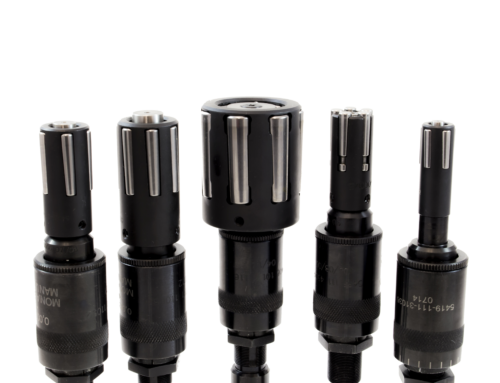
Consumables that are routinely pulled or replaced during tube cleaning deserve closer attention. Operators are seeing increased wear on brushes, shafts, actuator assemblies, and other cleaning components in data center applications. Under normal operating conditions and with proper storage, these parts typically last one to three seasons. However, the higher cleaning frequency required for chiller banks can accelerate wear across all of these components. Spare-part lead times have not kept pace with the new cleaning cadence. Sites that have not adjusted stocking levels during the past eighteen months are likely understocked today.
Open Questions Worth Tracking
A few things don’t have settled answers yet, but they’re worth watching as you plan forward
- Will Utilization Level Off? If AI build-out plateaus, current tube cleaning intervals may stabilize. If it doesn’t, six-to-eight-month condenser cycles could compress further.
- Will Operators Move to More Stable Water Chemistries? Some operators are exploring treatment changes to slow tube fouling at the source. How much interval length that buys back, and whether the chemical cost trades favorably against more frequent cleanings, is still an open question.
- Will Air Coolers Gain Share? Power and water constraints are pushing some operators to revisit the chiller-versus-air-cooler decision earlier in site design.
Bottom Line
None of these are reasons to delay the cleaning that’s on the schedule next month. They’re reasons to plan next year’s chiller maintenance program very differently than you would have three years ago.