U-Tube Heat Exchangers:
Tube Preparation, Projection, and Expansion
Installing tubes in a U-tube heat exchanger requires careful attention to tube preparation, projection setting, and expansion technique. The curved geometry, dense tube packing, and thick tube sheets leave little room for error. When each phase is handled correctly, the result is a reliable, long-lasting bundle. When they’re not, the consequences can include catastrophic vibration, tube damage, and costly repairs.
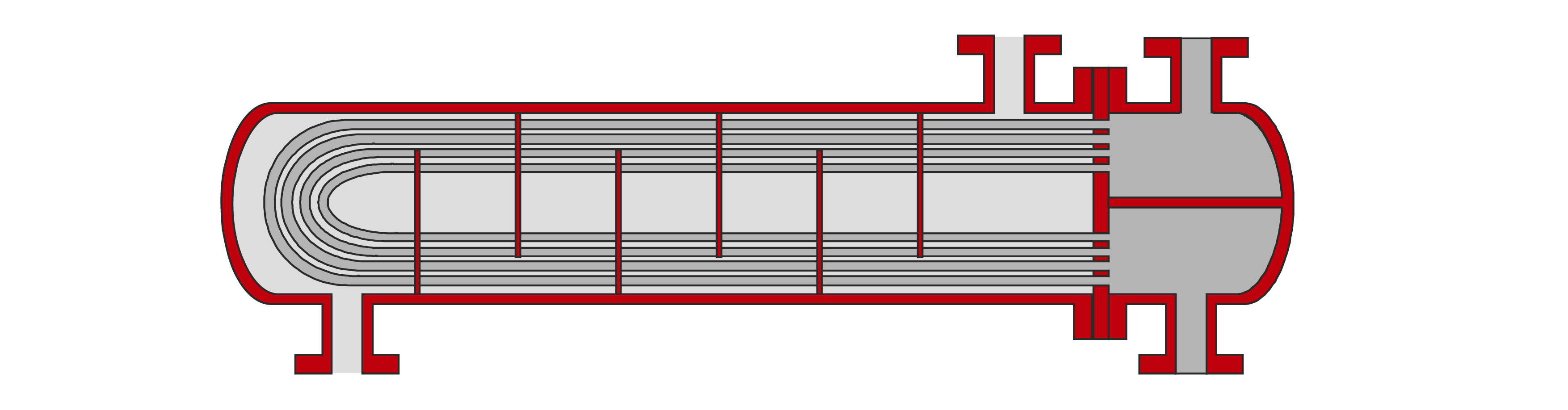
U-Tube Heat Exchanger Geometry: Installation Order
U-tube heat exchanger bundles are built from the inside out. The tubes with the tightest bend radius are installed first, followed by the tubes with progressively larger radii. This order is dictated by the geometry of the bundle.
One of the primary goals during U-tube installation is maintaining a specific clearance between each tube bend and the inner wall of the shell. This is to ensure unrestricted fluid flow.
Tube projection, meaning how far a tube extends past the tube sheet, is one of the biggest challenges during this process. If tube ends are pushed too far into the tube, the bend could end up too close to the shell wall or even hit an adjacent tube. Either outcome restricts flow and creates conditions for vibration and tube breakage during operation.
Setting and Maintaining Tube Projection
In new fabrication, tubes are typically cut to the exact length before installation. This makes projection straightforward to control. In retube applications, it’s more complicated. Years of thermal and mechanical stress cause warping (distortion). This often means that tube hole depths are no longer uniform, requiring careful adjustments to tube length to preserve the bundle’s geometry.
Once tubes are positioned, protecting that projection during rolling is essential. Two practices help significantly:
- Avoiding contact during rolling: Bumping or pulling on a tube while rolling adjacent tubes can shift its position. In a tightly packed U-tube bundle, even small shifts matter.
- Use methods that lock projection in place: Parallel pin expansion is well-suited for U-tube applications because its design prevents the tube from being pulled out during rolling. Seal welding tube ends to the tube sheet before final rolling adds another layer of security, keeping each tube fixed in position during the expansion process.
Controlling Wall Reduction and Avoiding Over-Rolling
Over-rolling carries significant risk in U-tube bundles because mistakes are difficult to correct. If an inner tube is over-rolled, it cannot be removed without disturbing the surrounding tubes. That typically means either pulling and replacing the surrounding tubes. This requires a partial or full retube, or plugging the damaged tube if operating conditions allow. Neither option is simple nor inexpensive.
Consistent rolling technique is the best protection against over-rolling. Know your target wall reduction, use a torque-controlled tool, and don’t deviate from the process mid-job.
Another complication that can occur with U-tubes is that the tube sheets are often very thick. When a tube sheet is too thick to expand in a single pass, step rolling is required to achieve the full required length. Repeated passes through a thick tube sheet put cumulative stress on the ligaments between tube holes, which can cause distortion or warping. Rolling in a deliberate pattern can help distribute the stress and minimize damage during the installation process.
What Can Go Wrong and Why It Matters
U-tube heat exchanger tube installation requires precision at each stage. The geometry that makes U-tube bundles effective, including tight bends, dense packing, and thick tube sheets, is also what makes corrections difficult once a mistake has been made. A tube that’s out of position, over-rolled, or installed without attention to projection can create problems that affect the entire bundle.
Understanding the risks at each stage, including installation sequence, projection control, wall reduction, and rolling pattern, is what separates a successful retube from one that requires early repairs.