Tube Expander Heat Management:
Protecting Your Expander Tools
Tube expansion is a cold forming process, but it generates significant frictional heat. Without proper tube expander heat management, that heat transfers directly to your tooling, causing premature wear and costly replacements.
Signs Your Expander Is Overheating
Watch for these early warning signs during tube expansion:
- Blueing: Discoloration of tool steel from extreme heat
- Pitting: Localized erosion on the rollers
- Galling: Material transfer and buildup on the tool surface
- Smoke: Generated from burning residual lubricant or tube material
Any of these signals a heat problem that proper lubrication and tool rotation can prevent.
Lubrication: Your First Line of Defense
Specialized lubricant is the single most effective tool for managing heat during expansion. It works two ways:
- Reduces friction: Creates a film between tool and tube to minimize abrasive force and initial heat generation.
- Dissipates heat: Draws heat away from the contact area, keeping operating temperatures in check.
Not All Lubricants Work
Common substitutes like dish soap, Crisco, and standard motor oil don’t cut it. Crisco actually retains heat, transferring it back into the expander and accelerating wear. If a lubricant can’t dissipate heat, it can’t protect your tooling.
The upfront cost of high-quality, specialized lubricant is far less than the cost of early tool failure and project downtime.
Advanced Strategies for Challenging Materials
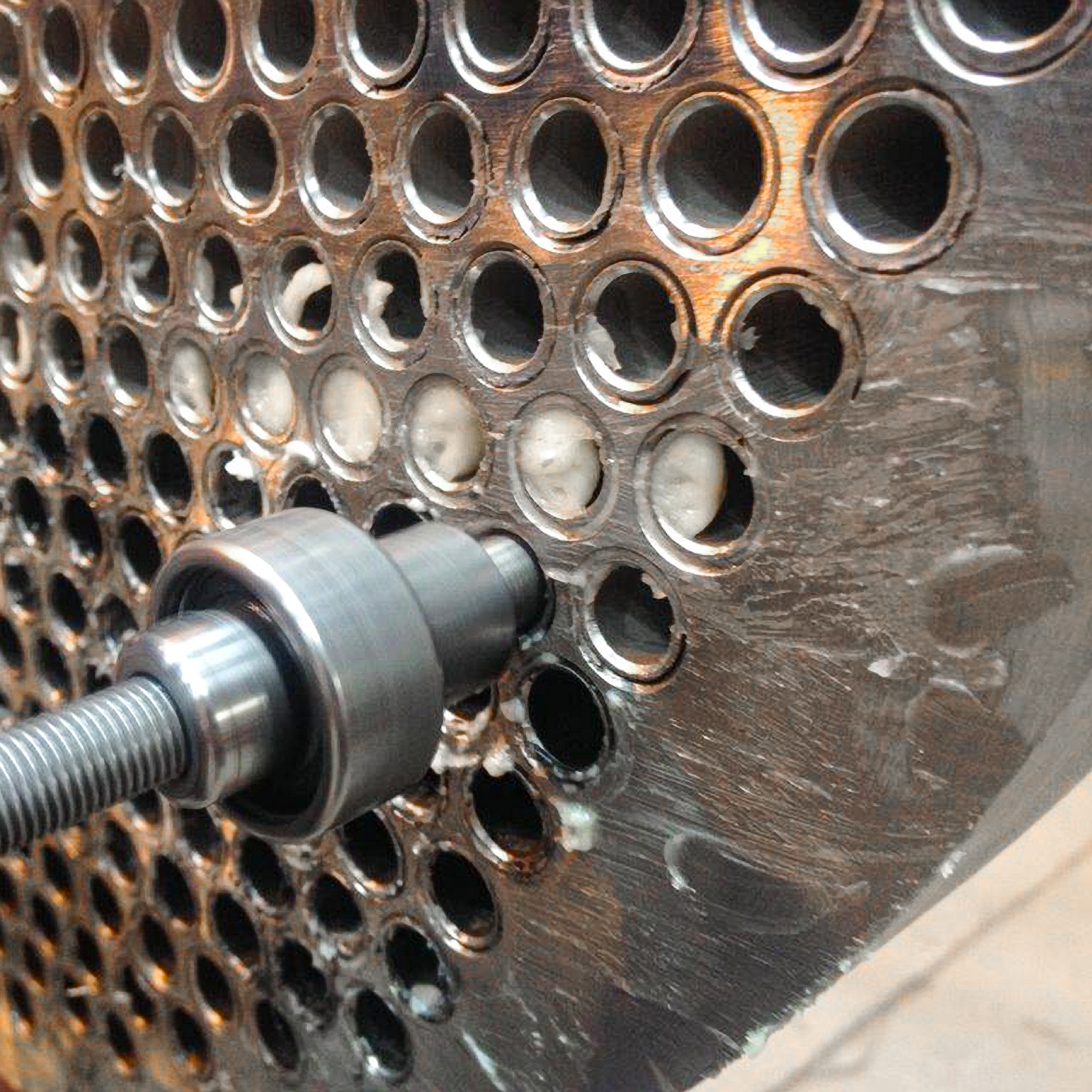
Hard tube materials (stainless steel, high alloys) and heavy wall thicknesses generate more heat and demand more than lubrication alone. Use a tool rotation strategy:
- Swap expanders regularly: Rotate tools after a set number of expansions based on material and wall thickness.
- Cool and clean on rotation: Submerge the swapped expander in clean lubricant. This cools the tool fast and flushes metal debris that increases friction.
- Consider assisted rolling systems: These automate lubrication for every expansion, improving consistency and reducing manual downtime.
The ROI of Proper Heat Management
Managing tube expander heat through quality lubrication and rotation scheduling directly translates to longer tool life, fewer replacements, and a smoother maintenance timeline. It’s one of the highest-return practices in heat exchanger maintenance.